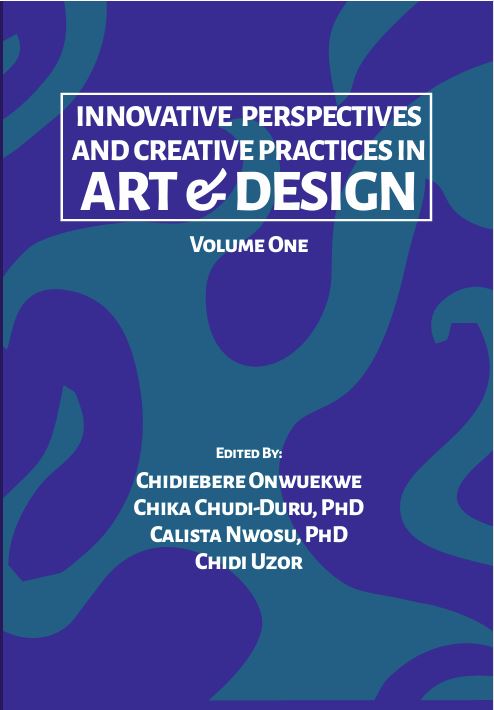
CHAPTER 9: THE STATE OF ART AND CULTURE IN NIGERIA: A CATALYST FOR THE ADVANCEMENT OF CULTURAL FIESTA
Abstract
INTRODUCTION
Many continents and nations rely on tourism, a worldwide phenomenon that is still spreading around the world, to earn foreign exchange. Some nations and regions use it as part of their overall development strategy to lessen economic inequality and diversify their economies. Recognized as a favourable means of development by many governments around the world Telfer, 2015); although difficulties of new problems and trends have usually benefited the global economy, it is an increasingly
competitive sector (Kim, Uysal & Sirgy, 2012). Despite the challenge threatening tourism globally, tourism is one of Africa’s fastest-growing economic sectors and one of the highest employers of labour (African Development Bank, 2015).
Due to the presence of numerous cultural communities, Nigeria is rich in cultural celebrations. Nigeria's geographical layout is so favourable that it serves as a foundation for many celebrations. The majority of the prerequisites for a Nigerian cultural display are not standard, making it simple to mobilise the resources that are currently available but mostly untapped. This chapter sought to describe how cultural celebrations could be used to tap into cultural resources for sustainable development. The paper also comes from the environmental determinism school of thought, which holds that a man's behaviour is strongly influenced by his immediate physical surroundings. Africa is home to a plethora of vibrant festivals and rites that are as enthralling as they are unique. They are mostly utilized to appease or deify cosmic powers over which man has no control before they influence his environment. At other times, such festivals are held in the pursuit of relaxation and enjoyment for the benefit of society and its citizens. The cornerstone of a person's culture, which is their way of life and values, is their past. Culture is the basic link between nature and man. Nonetheless, it is the only tool that man has to deal with nature. According to Jell-Bahisen (2014), a person's culture is a part of their history and is critical to their individual and collective identity, productivity, and progress.
These festivals and ceremonies serve a specific purpose as well as satisfy a particular need in society. Such needs, most of the time, are the same, but the mode adopted to express them differs from one society to the other. The operational definitions of the concepts of art and culture are beyond the scope of this study. However, it is
important to note that art and culture are interchangeable with the lives and living patterns of a group of people. Culture, according to Fasuyi (1973) and Bur (1987), is the total of a society's way of life.
A society without culture is a society that has died. Culture can be defined as the learned, created, and shared patterns of behaviour and thought by people living in social groups. It separates one human group from the others, as well as humans from other animals. A person's culture includes this/her beliefs, language, rituals, art, technology, styles of dress, ways of producing and cooking food, political and economic systems, and is the sum of a person's way of life. This evolved in response to the
challenge of living in their environment and gives order and meaning to their social, political, economic, aesthetic, and religious norms and modes of organization. For this paper, this definition will be sufficient as it is in line with the United Nation’s definition. Art and culture represent what people are renowned for, whether it
be what they do or say. For example, in Nigeria, culture is expressed through art, dance, dressing, language, and even the environment. Nigeria is known for its vast diversity of art forms, including music, dance, sculpture, drama, painting, pottery, installation art, and so on. These art forms can be found all around us, our culture, carnivals, and festivals, such as the Argungun Festival, New Yam Festival, Iria Saki Festival, traditional boat regatta, Eyo Festival, and Inagha Festival, play an important role in the lives of our people. It's crucial to consider the significance of festivals.
Festivals are defined as an organized series of acts and performances (usually in one place), feasting, and celebration, according to the World Web Dictionary (2019). Festivals are occasions for feasting and the periodic celebration of a feast or religious significance. Furthermore, carnivals are annual public festivals characterized by revelry and processions, as well as disturbances suggestive of a large public entertainment.
How to Cite
Benjamin Ejiohuo, & Vivian S. Davies (2023). CHAPTER 9: THE STATE OF ART AND CULTURE IN NIGERIA: A CATALYST FOR THE ADVANCEMENT OF CULTURAL FIESTA. CHAPTER CONTRIBUTION: INNOVATIVE PERSPECTIVES AND CREATIVE PRACTICES IN ART & DESIGN, 1(1).
Available at: https://afrijournals.com/library/index.php/innovative-perspectives/article/view/31